

Utilizing the latest generation of silicon photomultiplier(SiPM), it boasts ultra-high gain consistency. Employing a compact modular array design, it effectively reduces the detection blind zone. Compared to traditional PMT detectors, it achieves higher spatial resolution (0.8mm/0.6mm/0.5mm), significantly enhancing the image quality of PET. Additionally, it exhibits strong magnetic field resistance, requires low operating voltage, consumes little energy, dissipates minimal heat, and offers higher system stability.
The AFOV in each model of this series can scan the entire mouse at once, effectively observing the whole-body drug metabolism of the experimental animal with ultra-high detection efficiency.
Utilizing a unique design featuring precise crystal cutting and detection rings, it can detect and capture more photon signals, thereby enhancing imaging sensitivity.
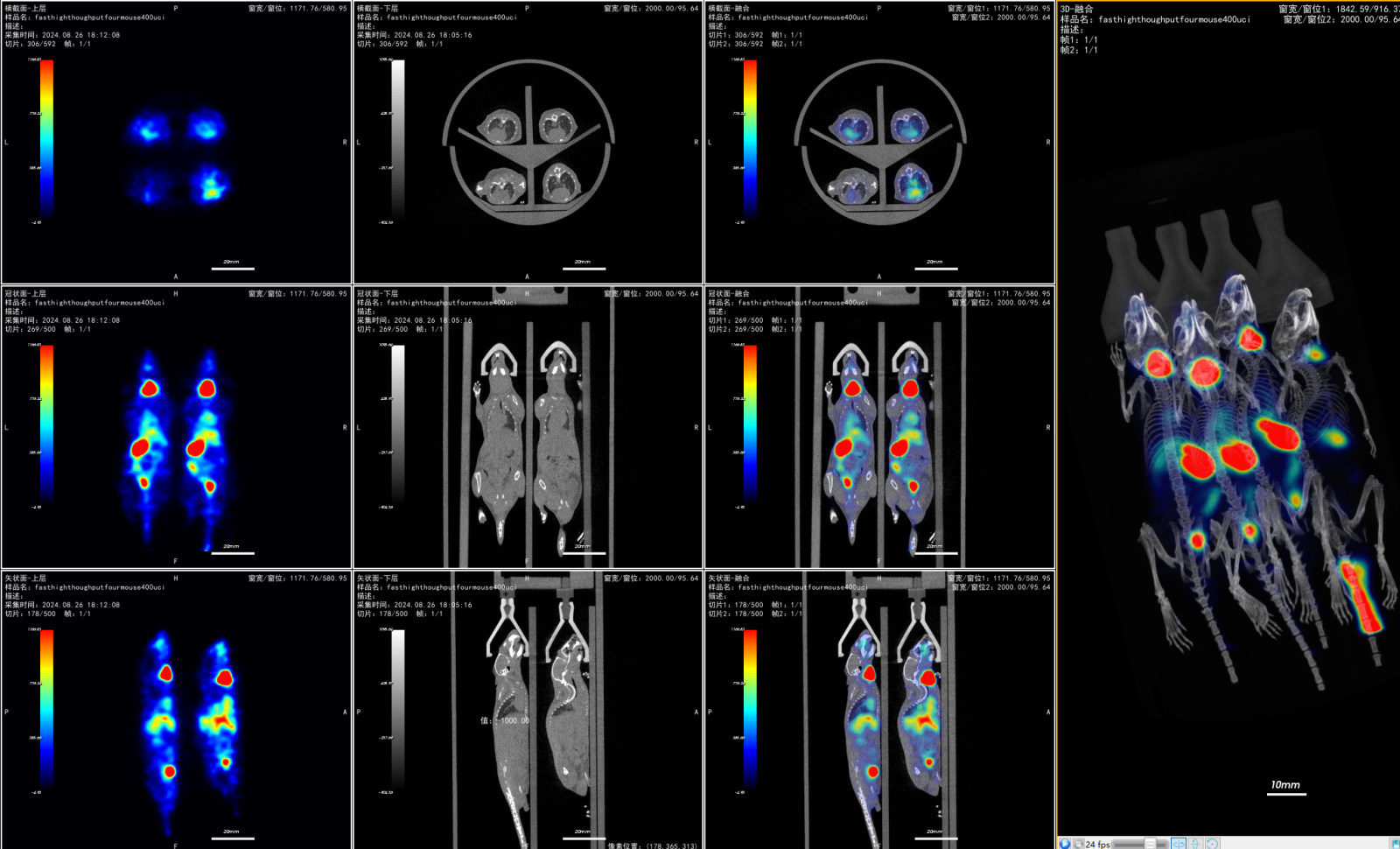
With large TFOV and multi-channel anesthesia pipeline design, supports high-throughput scanning of up to four mice.
The high-throughput characteristic, combined with the innovative 3D-PSF iterative reconstruction technology (with balanced detection accuracy), contributes to enhancing pharmacokinetic research.
Synchronously implement drug injection and data collection,
Track the dynamic distribution of the tracer in the animal body in real time,
Accurately analyze the metabolic process of drugs.
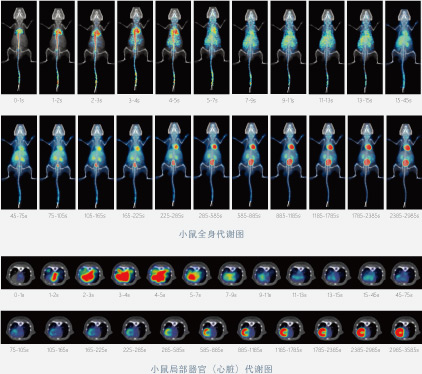
Stable imaging can be achieved at both high and low doses, accurately reflecting the dose level and enabling precise quantitative analysis.
Possessing intellectual property rights for all PET, SPECT, and CT systems that ensures accurate image registration;
It also supports the registration and reconstruction process with different MR and SPECT machines, as well as the fusion of images.
In the SPECT system, a novel oxide crystal is employed, featuring high light yield, high density and hardness, no deliquescence, no self-radiation, and superior image quality.
Scalability: Scalable with multiple detectors, flexible configuration, and upgradeability;
Independence: In the case of multiple detectors, the failure of one of them does not affect imaging and equipment usage;
High stability: No frequent calibration is required.
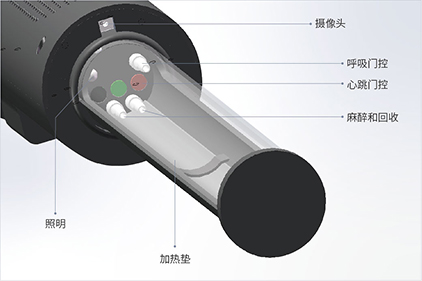
· Heart rate and breathing monitoring and gating system:Continuously detect, transmit, and process animal vital signs data, and control the impact of breathing and heartbeat on imaging;
· Video surveillance: Observing the activities of mice and rats inside the cabin;
· Equipped with an anesthesia system and gas recovery function;
· Heating function: Continuously maintain the body temperature of large/small mice during the scanning process;
· Cabin interface recognition: Identify cabin types to avoid collisions;
· Lighting function: used in conjunction with video surveillance;
· Cabin anti-fall design;
· Cabin cover recognition function: If the cabin does not have a cover, the system will not initiate scanning,
Prevent animals from waking up and escaping due to forgetting to close the hatch cover.
· Provide focused multi-pinhole collimators in multiple specifications, suitable for different energy nuclides;
· The supported nuclide energy range is broader, spanning from low to high energy;


 中文
中文


